

close
Choose Your Site
Global
Social Media


Views: 0 Author: Site Editor Publish Time: 2026-08-14 Origin: Site


Many people build their home reading or study areas using leftover furniture. You grab a spare dining chair. You drag in an old side table. You call it a day. Sadly, this makeshift approach often leads to severe ergonomic strain. It also causes poor mental focus. Transitioning from a random setup to a purpose-built environment changes everything. Achieving this requires evaluating furniture beyond mere aesthetic appeal. We must prioritize sustained physical support and spatial efficiency.
Successful spaces demand careful planning and the right structural elements. They balance ergonomic seating, functional surface areas, and scalable storage within specific room constraints. In this guide, you will learn how to properly assess your spatial limits. We will explore the exact criteria for choosing supportive seating and surfaces. You will also discover how to integrate lighting and storage for a truly optimized sanctuary.
Purpose Dictates Posture: Passive reading requires different seating angles and support than active studying or laptop work.
Component Evaluation: A dedicated book chair, an appropriately scaled book table, and a structurally sound bookcase are the foundational pillars of a high-performance space.
Storage Realities: Shelving must be evaluated on load-bearing capacity and depth, not just height and finish.
Environmental Integration: Even premium furniture fails if lighting angles and acoustic factors are ignored during implementation.
Before you purchase new pieces, you must analyze your available room. Selecting the right Study Furniture requires a solid understanding of your actual needs. First, you must differentiate between a passive reading nook and an active study area. A reading nook leans heavily toward lounging. It accommodates relaxed postures for reading fiction. An active study area demands something completely different. It requires upright posture. It forces task focus for taking notes or typing.
You cannot simply squeeze furniture into an empty corner. You must respect spatial clearances. Proper planning ensures you can move freely.
Ingress and Egress: Leave at least 30 to 36 inches of clearance in front of your seat. You need this space to stand up easily.
Identifying Dead Zones: Look for architectural dead zones. Corners, alcoves, and under-stair spaces work perfectly. They naturally isolate you from household activity.
Avoiding High-Traffic Areas: Never place your setup in a busy hallway. People walking past will constantly break your concentration.
Many people mistakenly chase the ultimate cozy aesthetic. They buy the softest seating they can find. This is a massive error. Overly plush setups ruin study outcomes. When you sink into deep cushions, your spine misaligns. You slump forward. This posture restricts breathing and induces drowsiness. You need firm, structural support. Firmness keeps your spine neutral. It keeps your mind alert. This structural support becomes absolutely critical for any study session exceeding 45 minutes.
Your chair dictates how long you can comfortably focus. Finding the perfect Book Chair requires a strict focus on ergonomics. You cannot rely on standard living room accent chairs. These standard chairs often look beautiful. However, they lack proper lumbar support. Their seats are usually too deep. This causes your lower back to flatten. It compresses your spinal discs and leads to chronic pain.
You must evaluate chairs based on biomechanical support. Pay close attention to the following three dimensions.
Seat Depth and Pitch: The seat must allow your feet to rest flat on the floor. The backrest pitch should sit between 100 and 110 degrees. This optimal angle prevents lower back compression. It maintains a highly supportive reading posture.
Armrest Height: Holding a heavy textbook strains your shoulders. Armrests relieve this exact tension. They must sit exactly at your natural elbow height. If they are too low, you will slump laterally.
Material Density: The internal materials matter immensely. They determine how the chair ages over months of daily use.
Feature | High-Resiliency Foam | Down-Fill Cushions |
|---|---|---|
Structural Support | Excellent. Maintains rigid shape over time. | Poor. Compresses quickly under body weight. |
Maintenance Needs | Low. Never requires manual fluffing. | High. Requires constant reshaping and beating. |
Best Application | Active studying and prolonged work sessions. | Short, casual lounging periods only. |
Always match the footprint of the chair to your room size. You must prioritize function over oversized aesthetics. Huge, bulky chairs crowd small spaces. They restrict your movement and make the room feel claustrophobic. A sleek, ergonomically designed seat serves you much better.
Every workspace needs a staging ground. A dedicated Book Table serves as your operational hub. It differs significantly from a traditional executive desk. Desks are heavy and dominant. They often overwhelm small rooms. A book table offers superior versatility. It serves as a secondary surface for references. You can rest your coffee on it. You can place a laptop on it. It provides utility without heavy visual weight.
Do not just buy the first attractive side table you see. You must evaluate the surface based on functional metrics.
Height Alignment: The table surface must align perfectly with your chosen chair. Standard heights hover around 28 to 30 inches. If the table sits too low, you will hunch over it. This creates severe neck strain.
Surface Area Limits: Bigger does not equal better. Size the table to accommodate only essential items. It should hold a task lamp, your current book, and a notebook. Extra space encourages massive clutter accumulation.
Material Finish: High-gloss surfaces reflect overhead lights directly into your eyes. This glare causes harsh eye strain. You should actively opt for matte finishes. Non-reflective surfaces absorb light and keep your vision comfortable.
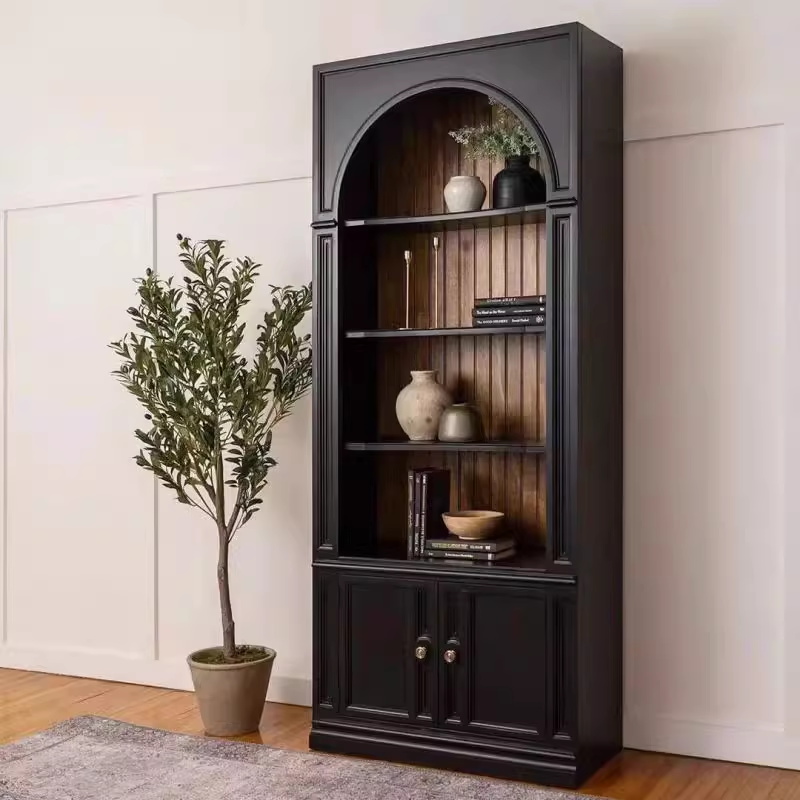
Your reference materials need a permanent home. A high-quality Bookcase is essential for organizing your physical media. Textbooks and hardcover collections are exceptionally heavy. You must acknowledge these load-bearing realities. Evaluate shelving materials strictly based on their bowing risk. Solid wood easily supports heavy loads. Plywood offers excellent structural rigidity. Conversely, thin particleboard will sag noticeably in the center over time.
You must customize your storage to fit your exact media profile. Pay close attention to depth and scalability.
Depth Requirements: Standard trade paperbacks require very little depth. They fit perfectly on 8-inch shelves. Academic journals demand more space. Oversized art books might require 14-inch shelves. Selecting a unit with appropriate depth prevents wasted floor space.
Adjustable vs. Fixed Shelving: Your physical media collection will inevitably change. Adjustable shelves offer long-term scalability. Fixed shelves lock you into an inflexible layout. Always choose adjustable hardware when possible.
Media Type | Recommended Shelf Depth | Floor Space Efficiency |
|---|---|---|
Standard Paperbacks | 8 inches | High (Maximizes room space) |
Trade Fiction & Non-Fiction | 10 inches | Moderate |
Academic Textbooks | 12 inches | Moderate |
Oversized Art Books | 14+ inches | Low (Requires larger footprint) |
You must address physical safety before filling your shelves. Tall storage units tip over easily. A bump or minor vibration can cause disastrous accidents. Wall-anchoring systems are a non-negotiable requirement. You must secure any unit over 30 inches tall directly to a wall stud. This simple step entirely mitigates tipping risks.
Even premium furniture fails if you ignore environmental integration. A high-performance space requires careful tuning of external variables. Lighting, acoustics, and organizational habits determine your daily success.
Relying solely on ambient room light is a dangerous habit. Standard ceiling fixtures create harsh shadows across your reading material. This dynamic causes rapid eye fatigue. You must layer your lighting. First, set up soft background illumination to warm the room. Next, introduce focused task lighting. Aim a high-quality desk lamp directly at your book or table. This combination eliminates shadows and protects your vision.
Environmental comfort directly impacts your focus. Never place your seating directly over HVAC vents. Constant hot or cold air blowing on you is highly distracting. You must also manage acoustic factors. Bare walls and hardwood floors create high-echo zones. Sound bounces endlessly. You need soft materials to absorb these sound waves. Add a thick wool rug under your chair. Hang heavy curtains over nearby windows. These materials dramatically dampen ambient noise.
A beautifully engineered space can quickly become a messy nightmare. Small items pile up fast. You must establish strict boundaries to prevent clutter creep. Define exactly what lives on your table. Keep only active tasks there. Everything else must be filed away in your storage unit. Maintaining this discipline ensures a low-distraction environment.
A high-functioning study area is an engineered space, not just a decorated one. You cannot achieve deep focus by throwing random furniture into a corner. You must actively design the environment to support your body and mind.
Success relies heavily on a core trio of purposeful items. Investing strategically in a supportive chair, an appropriately scaled table, and a heavy-duty storage unit yields massive dividends. These elements protect your physical health and elevate your daily focus.
Your next steps are clear. Measure your intended space today. Map out your required clearance zones on the floor. Finalize your budget allocation across the three core items. Once you define these parameters, you can begin shortlisting specific products with total confidence.
A: Focus on practical clearance: typically a 4x5 foot area allows for a chair, small table, and movement.
A: Address visual clutter: open shelving for quick access, closed lower cabinets for supplies that distract.
A: Emphasize structural framing (hardwood, dense foam) clad in tactile fabrics, avoiding overly deep, unsupportive designs.
A: Define the limitation: Book tables work for reading and light note-taking; multi-monitor setups or drafting require standard desk dimensions.


