

close
Choose Your Site
Global
Social Media

Views: 0 Author: Site Editor Publish Time: 2026-05-15 Origin: Site


The entryway serves as a home’s operational chokepoint. It also delivers the very first aesthetic impression to your guests. A poorly selected storage piece creates physical bottlenecks. It simply fails to hide daily clutter. Conversely, the right piece balances concealed storage seamlessly alongside natural spatial flow. Buyers evaluating entryway setups often struggle. You must match functional capacity, such as shoe storage and mail sorting, against strict dimensional constraints. Narrow hallways leave little room for error. This guide bypasses generic styling tips. Instead, we objectively break down primary design categories, structural evaluation frameworks, and precise sizing rules. You will learn exactly how to measure your available space. We will show you how to select an optimal configuration. Our ultimate goal is helping you make a confident, return-free purchase.
Differentiate from Mudrooms: True foyer cabinets prioritize concealed storage and polished aesthetics over the exposed, high-utility hooks of mudroom builds.
Form Follows Function: The four core categories (Slim Consoles, Shoe Cabinets, Hall Trees, and Sideboards) solve distinct organizational bottlenecks.
Strict Clearances Govern Choice: Successful implementation requires a minimum of 36 inches (90 cm) of unobstructed walkway clearance and adherence to the "Rule of Thirds" for wall proportion.
Shape Dictates Flow: Corner and Demilune (half-moon) shapes mitigate spatial risks in square or narrow foyers where standard rectangular footprints fail.
Homeowners frequently confuse mudroom installations with formal entryway storage. Both distinct zones serve as household drop areas. However, their functional goals diverge sharply. Mudroom furniture leans heavily toward rugged utility. You typically see open cubbies, exposed metal hooks, and damp gear storage. Families use mudrooms to shed muddy boots and wet winter coats. The space embraces a highly functional, slightly chaotic aesthetic.
In contrast, Foyer Furniture sits directly in your primary guest entrance. It demands concealed storage solutions. Closed doors and smooth drawers maintain a refined, clutter-free visual baseline. When guests walk through your front door, they should not see tangled dog leashes or scattered sneakers. A dedicated entryway piece hides this daily chaos behind polished hardware and clean lines.
Many modern homes lack a dedicated secondary mudroom. Homeowners must therefore compromise. Certain high-capacity storage units bridge this architectural gap. They incorporate hidden shoe compartments alongside durable top surfaces. You achieve the rugged capacity of a mudroom without looking purely utilitarian. This "makeshift mudroom" approach requires careful selection. You must balance maximum internal volume against an elegant exterior facade.
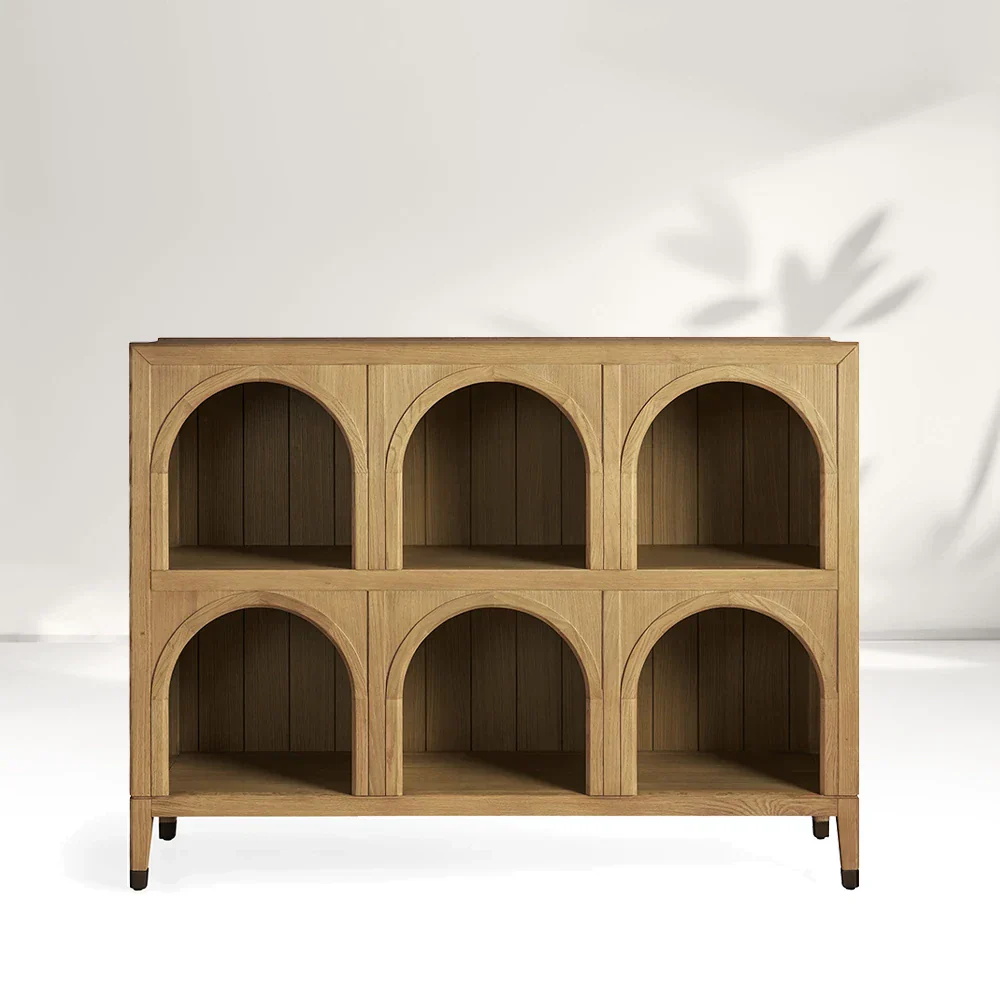
Selecting a Foyer Cabinet requires matching the furniture type to your specific spatial limitations. We classify these storage units into four primary categories. Each solves a distinct organizational bottleneck.
Narrow hallways and tight apartment entryways demand slim solutions. You simply cannot fit bulky furniture in a corridor measuring only four feet wide. Slim consoles offer the perfect structural footprint. Evaluation criteria typically focus on extremely shallow profiles. Standard depths hover under 12 to 15 inches. Some floating wall-mounted versions eliminate floor contact entirely. This visual trick removes visual weight and makes tight spaces feel larger.
However, implementation risks remain high. Floating cabinets require direct stud-mounting for safety. Drywall anchors will fail under the weight of heavy bags. Furthermore, you face very limited interior capacity. Slim consoles work wonderfully for keys, mail, and minimal accessories. They fail completely if you need to store bulky winter gear.
High-traffic households frequently prioritize footwear organization above all else. Dedicated shoe cabinets tackle this exact problem. When evaluating these pieces, inspect the interior mechanisms. Look for tilt-out drawer systems or highly adjustable interior shelving. Tilt-out drawers pivot vertically. They allow you to store shoes in incredibly shallow frames.
You must carefully measure the maximum shoe size of household members. Implementation risk centers around depth constraints. Shallow tilt-out models often fail to fit men's US size 11 or larger. Chunky sneakers and tall winter boots frequently jam the pivoting mechanism. Always verify internal clearance dimensions before buying.
Open-plan living spaces benefit greatly from tall, vertical furniture. Hall trees act as an organizational "Command Center." They easily serve as a makeshift mudroom. Evaluation criteria include checking the combined features. A good hall tree combines a lower storage cabinet, a sturdy seating bench, a mirrored backboard, and upper coat hooks.
The primary implementation risk involves the massive visual footprint. Hall trees consume significant vertical wall space. They require wide, tall walls. If you place a heavy hall tree in a narrow hallway, it creates a cramped, tunnel-like feeling.
Grand foyers and wide transitional spaces require maximum enclosed volume. Dining room sideboards offer excellent deep storage. They frequently feature depths exceeding 18 inches. You can easily store bulky items inside. Backpacks, seasonal sports gear, and large purses fit without issue.
Beware the implementation risks. Repurposed sideboards are heavy and difficult to maneuver. Their deep footprints easily disrupt traffic flow. You should never place an 18-inch deep credenza in a standard 3-foot hallway. It violates safety clearances and creates daily frustration.
Cabinet Type | Ideal Scenario | Standard Depth | Primary Limitation |
|---|---|---|---|
Slim Console | Narrow apartments | Under 15 inches | Low internal storage capacity |
Shoe Cabinet | High-traffic families | 9 - 14 inches | Struggles with large/tall footwear |
Hall Tree | Open-plan entryways | 16 - 20 inches | Overwhelming visual footprint |
Sideboard | Grand, wide foyers | 18+ inches | Blocks standard corridor flow |
Your entryway layout determines the acceptable footprint. Do not force a standard rectangular box into a complex architectural corner. Shape dictates flow. Storage modularity dictates daily usability.
Furniture geometry impacts human movement heavily. Evaluate your space against these three distinct shapes:
Rectangular: This is the standard high-volume choice. It requires long, wide, and perfectly straight walls. Rectangular units provide maximum internal cubic inches.
Demilune (Half-Moon): Curved edges prevent painful "hip checks." High-traffic zones and tight turn radiuses benefit greatly from half-moon designs. The sweeping curve naturally guides foot traffic past the furniture.
Corner Cabinets: Small, square entryways frequently suffer from dead space. Corner units maximize these neglected angles. They utilize deep corner volume without encroaching on interior door swings.
Internal organization features matter just as much as external shape. Select combinations matching your daily habits.
Drawers: You absolutely need drawers for micro-clutter. Keys, sunglasses, unread mail, and dog leashes belong hidden away. Check the hardware closely. You want smooth, metal-on-metal ball-bearing glides for longevity.
Closed Doors: Doors remain critical for visually hiding larger messy items. They conceal bulky bags and overflowing shoe piles. Furthermore, doors act as an essential dust barrier in drafty entryways.
Open Cubbies: Cubbies work best for frequently accessed items. Slippers and dog walking shoes fit nicely here. You can pair open cubbies with stylish woven baskets. Placing lower cubbies near the floor helps build independent storage habits in young children.
Design aesthetics fail completely if the furniture blocks your walkway. Structural rules guarantee ergonomic comfort. You must adhere to strict sizing ratios and physical clearances.
The absolute minimum walkway clearance in front of any furniture is 36 inches (90 cm). You cannot negotiate this metric. Anything less violates standard building code norms. A tighter walkway guarantees a cramped, uncomfortable entry experience. Guests will struggle to remove coats. You will struggle to carry groceries through the door.
Standard hallway furniture depths range from 12 to 16 inches. Ultra-slim profiles drop dramatically to 8 or 10 inches. Many buyers measure the static cabinet depth and stop. This is a crucial mistake. Always account for the operational depth. You must measure the footprint when cabinet doors and drawers are fully extended. A 15-inch deep unit needs another 15 inches of clearance just to swing the door open.
The ideal drop-zone height caters to human biomechanics. For standard adult use, target 30 to 36 inches from the floor. This represents rough waist height. It allows you to drop keys or sort mail without bending over or reaching upward. Taller cabinets work well for display, but they fail as practical daily drop zones.
Furniture should never look overwhelmingly large or awkwardly undersized. Interior designers rely on the "Rule of Thirds." Calculate your total available blank wall space. Your chosen piece should occupy approximately two-thirds of that specific wall width. If your wall spans 60 inches, aim for a 40-inch wide unit. This leaves adequate negative space on both sides. Negative space lets the architecture breathe.
Measurement Category | Ideal Target Metric | Primary Reason |
|---|---|---|
Walkway Clearance | 36+ inches (90 cm) | Prevents bottlenecking; meets code norms |
Ergonomic Height | 30 - 36 inches | Comfortable waist-height drop zone |
Wall Proportion | 2/3 of wall width | Maintains visual balance and negative space |
Entryway furniture takes more daily abuse than almost any other piece in your home. It endures dropped keys, wet umbrellas, heavy backpacks, and dirty boots. Flimsy construction reveals itself quickly under these harsh conditions.
Assess material composition carefully. Solid wood construction offers superior longevity. High-quality wood veneers serve as excellent, stable alternatives. If your household is particularly hard on surfaces, upgrade the top. Consider stone-topped models featuring marble or granite. Reinforced glass tops also offer high scratch resistance against sharp metal keys.
Never ignore hinge quality. Flimsy particleboard combined with cheap, lightweight hinges will fail. The structural joints rip apart under the weight of heavy winter gear. Soft-close hinges are absolutely necessary for high-frequency use. They prevent doors from slamming shut, protecting the cabinet frame from daily shock damage.
Finally, match the material finish to your home’s overarching architectural style. Sleek metals and glossy acrylics fit beautifully into Modern spaces. Distressed wood paired with heavy metal framing anchors an Industrial aesthetic. Clean lines merged with classic, warm wood grains define Transitional styles. Cohesive materials ensure your entryway introduces the rest of your house perfectly.
Selecting the optimal foyer storage requires a strict, chronological approach. You must measure available walkway clearance first. Do not skip this step. Second, strictly define your primary storage bottleneck. Decide whether you need to hide a mountain of shoes, organize small keys, or hang bulky coats. Third, select the appropriate shape and style to match your defined needs. Avoid forcing deep sideboards into narrow corridors. Rely on slim profiles and half-moon shapes when space runs tight.
Your immediate next step is practical testing. Grab a roll of painter's tape. Tape out the exact dimensions of your shortlisted furniture directly on your entryway floor. Include the width, the closed depth, and the open-door depth. Physically test the 36-inch clearance rule by walking past the taped area. This simple physical exercise guarantees you make a confident, return-free purchase.
A: Yes. Sideboards are excellent alternatives if your foyer is wide enough to handle their typical 18-inch depth. They offer superior enclosed storage capacity compared to standard slim entryway consoles. Ensure your corridor maintains a 36-inch walkway clearance before finalizing the placement.
A: Opt for cabinets with durable, wipeable surfaces. Use closed lower doors to easily hide messy toys and scattered shoes. Incorporate low-height open cubbies. Lower cubbies allow toddlers to safely reach and put away their own items independently.
A: Look for a high-low combination piece. A Hall Tree featuring a storage bench works perfectly. Alternatively, pair a sturdy enclosed shoe cabinet with wall-mounted pegboards and hooks. This strategy securely simulates practical mudroom functionality while remaining within a formal aesthetic footprint.


